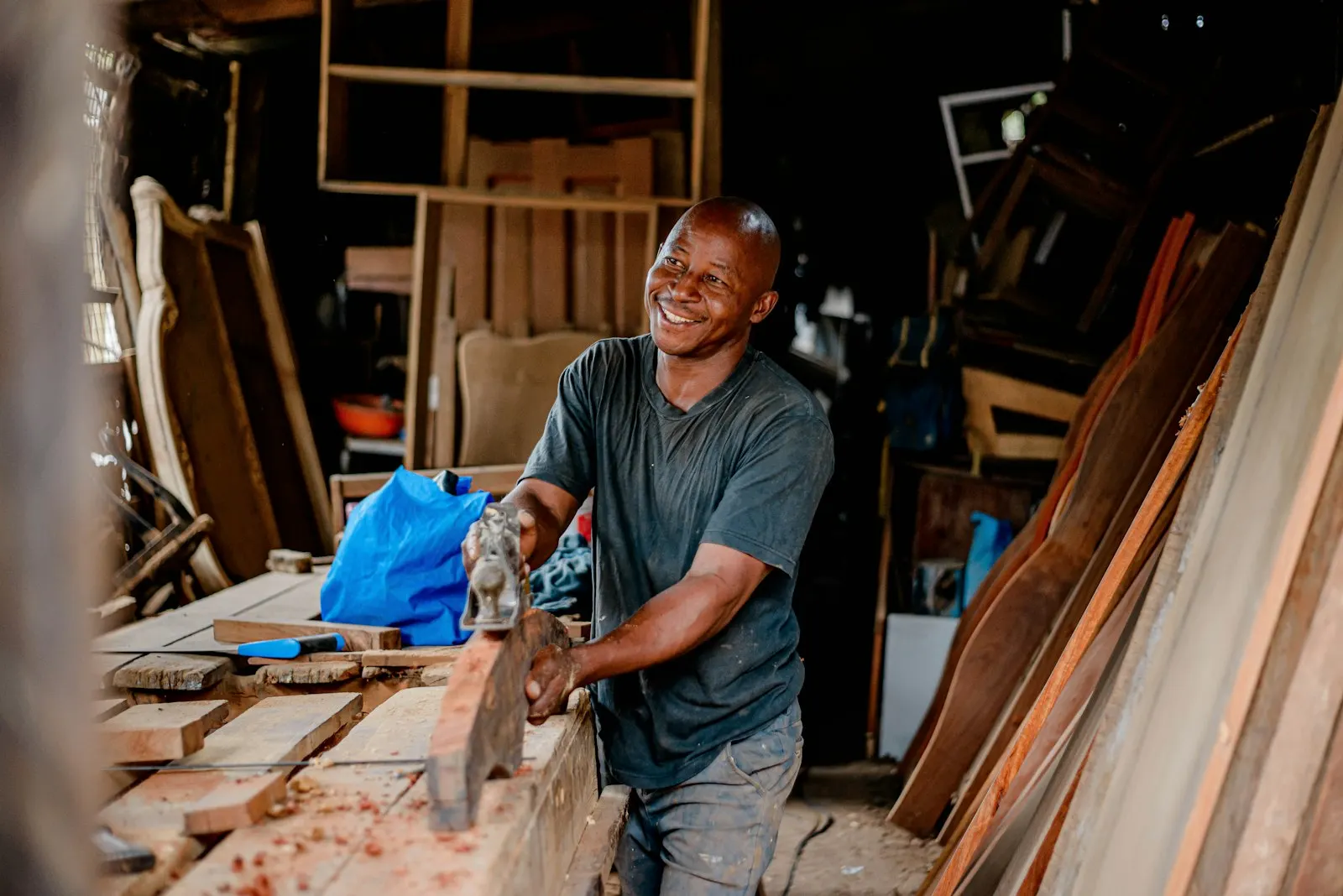
A lot of handyman work comes down to good carpentry. Doors, frames, skirting, shelving, steps, decks, gates and fences all depend on someone who can measure accurately, cut cleanly and join timber so it lasts. We take on small and medium carpentry jobs across Pakenham, Officer, Beaconsfield and the towns out towards Bunyip, ranging from a short run of skirting to built-in shelving or a small timber platform for a water tank.
Carpentry jobs we do
- Architraves and skirting boards, repairs and replacement
- Window and door trims
- Timber repairs on frames, sills and fascias
- Built-in shelving and storage
- Wardrobe and linen press shelving
- Timber steps and small platforms
- Garden edging and raised garden beds
- Small timber structures such as screens, planter boxes and bin enclosures
- Timber gates and fence sections
- Deck and pergola repairs (see deck and pergola repairs)
- Trimming doors and fitting door stops
- Timber lattice and screens
- Window seats and simple bench seating
- Repairs to timber stairs and handrails
Trim work
Skirting boards and architraves finish the edges of a room. Damaged, missing or mismatched trims make a room look unfinished. We:
- Match existing profiles where possible, or find the closest available
- Cut neat mitres and scribe joints into uneven walls and floors
- Fix trims securely and fill nail holes
- Prime and paint, or leave ready for painting
New flooring often means skirting boards have to come off and go back on. We can remove skirting carefully before your flooring is laid and refit it afterwards, adding new lengths where needed.
Timber repairs
Timber in exposed places such as window sills, door frames, fascias and verandah posts can rot, especially where paint has failed. Small areas of rot can often be cut out and repaired with new timber or a suitable epoxy filler. Larger damage may mean replacing the whole component. We’ll assess the extent of the rot and recommend the most durable fix.
Built-in shelving and storage
Custom shelving makes better use of awkward spaces like alcoves, under-stair cavities, garage walls and study nooks. We can build:
- Adjustable shelving on tracks and brackets
- Fixed timber or melamine shelves between walls
- Simple built-in cupboards with doors
- Open bookcases fitted to a space
- Garage and shed shelving
Outdoor carpentry
Outdoors, we build and repair practical structures:
- Garden beds and planter boxes in treated pine or hardwood
- Bin and hot water service screens
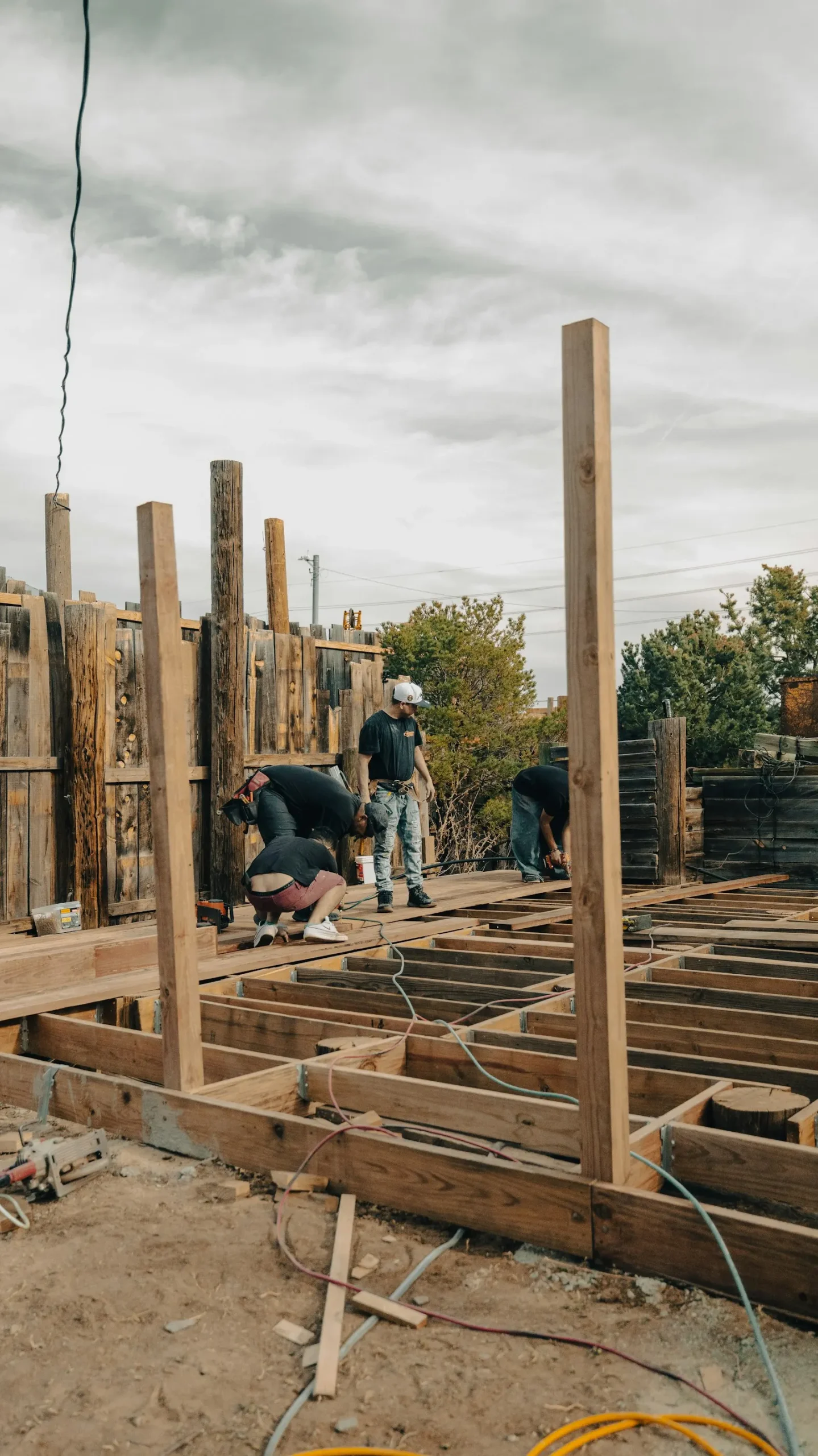
- Small timber platforms for tanks or pumps on rural blocks
- Timber steps on sloping sites
- Simple timber retaining edges for garden beds (not structural retaining walls)
On larger blocks around Pakenham South, Nar Nar Goon, Tynong and Bunyip, these practical jobs are always in demand.
Choosing the right timber
- Treated pine. Affordable and suitable for many outdoor uses when the right treatment class is chosen for in-ground or above-ground use.
- Hardwood. Durable and attractive for decks, posts and visible structures.
- MDF and pine. Common for internal trims; MDF is smooth and stable once painted.
- Plywood and melamine. For shelving and cabinetry.
We’ll recommend materials suited to the job, the location and your budget.
Accuracy matters
Good carpentry relies on careful measurement and setting out. We check walls and floors for square and level before cutting and scribe pieces to fit irregular surfaces. Older homes almost never have perfectly square corners, and newer homes often have small variations too.
Permits and structural work
Some building work needs a permit or must be done by a registered builder, such as structural alterations, new decks above a certain height and retaining walls. We stay within the scope of handyman carpentry and will tell you if your project needs a builder.
Carpentry across our service area
We do handyman carpentry in Pakenham, Pakenham South, Pakenham Upper, Officer, Beaconsfield, Nar Nar Goon, Tynong, Garfield and Bunyip. Carpentry pairs with floor and skirting repairs and door repairs. Request a free quote with a description and measurements.
Carpentry in older and newer homes
Older homes. Weatherboard and brick-veneer homes in central Pakenham, Beaconsfield and along the highway at Nar Nar Goon, Tynong, Garfield and Bunyip were often built with solid timber trims, hardwood frames and timber windows. Carpentry work there often involves repairing what’s already in place: patching sills, replacing rotten sections of fascia, re-fixing architraves that have moved, and matching older profiles. Timber in these homes can be very hard, so pre-drilling is essential to avoid splitting.
Newer homes. Homes in Officer, Officer South and Pakenham East typically use MDF or finger-jointed pine trims, pine stud frames and aluminium windows. Carpentry there tends to focus on additions: shelving, built-ins, extra storage and outdoor structures. Steel frames are also used in some new homes, which require different fixings.
Measuring and planning a shelving project
When planning built-in shelving, consider:
- What will go on it. Books are heavy; decor is light. Heavier loads need thicker shelves, shorter spans or more support.
- Shelf span. Long shelves sag. As a rule of thumb, shelves made from standard 16 mm melamine shouldn’t span much more than about 800 mm without support for heavy loads. Thicker or stiffer materials allow longer spans.
- Depth. Books are usually fine at around 250–300 mm; storage for boxes or linen may need more.
- Spacing. Adjustable shelving gives flexibility as needs change.
- Finish. Melamine is durable and easy to clean; painted MDF gives a custom look; timber can be stained or oiled.
We’ll talk through your needs and suggest a design that’s practical and looks good.
Outdoor timber and durability
Timber outside needs to cope with rain, sun and soil contact. Key points:
- Use treated pine of the correct hazard class: H3 for above-ground outdoor use and H4 for in-ground contact like garden bed posts.
- Seal cut ends of treated pine with an end-grain preservative.
- Use galvanised or stainless steel fixings to avoid rust stains and failure.
- Keep timber off the ground where possible and allow it to drain and dry.
- Apply and maintain a protective coating.
In wetter spots and around clay soils, these steps make the difference between timber that lasts years and timber that rots quickly.
Raised garden beds
Raised garden beds are popular on the larger blocks around Pakenham South and Bunyip and on smaller backyards in Officer. They improve drainage, reduce bending and make gardening easier for older people. We build them from treated pine, hardwood sleepers or other materials, at heights to suit. For food gardens, some people prefer untreated hardwood or a liner between the soil and treated timber.
Hiding the ugly bits
Bins, heat pumps, hot water services and air conditioning units can be screened with timber slat screens. We leave proper clearances for ventilation and service access as recommended by manufacturers.
Trims around new doors and windows
When doors or windows are replaced, the trims often need replacing or adjusting. We fit new architraves, reveal linings and sills, then fill and prepare them for painting. See door repairs and installation.
Our tools
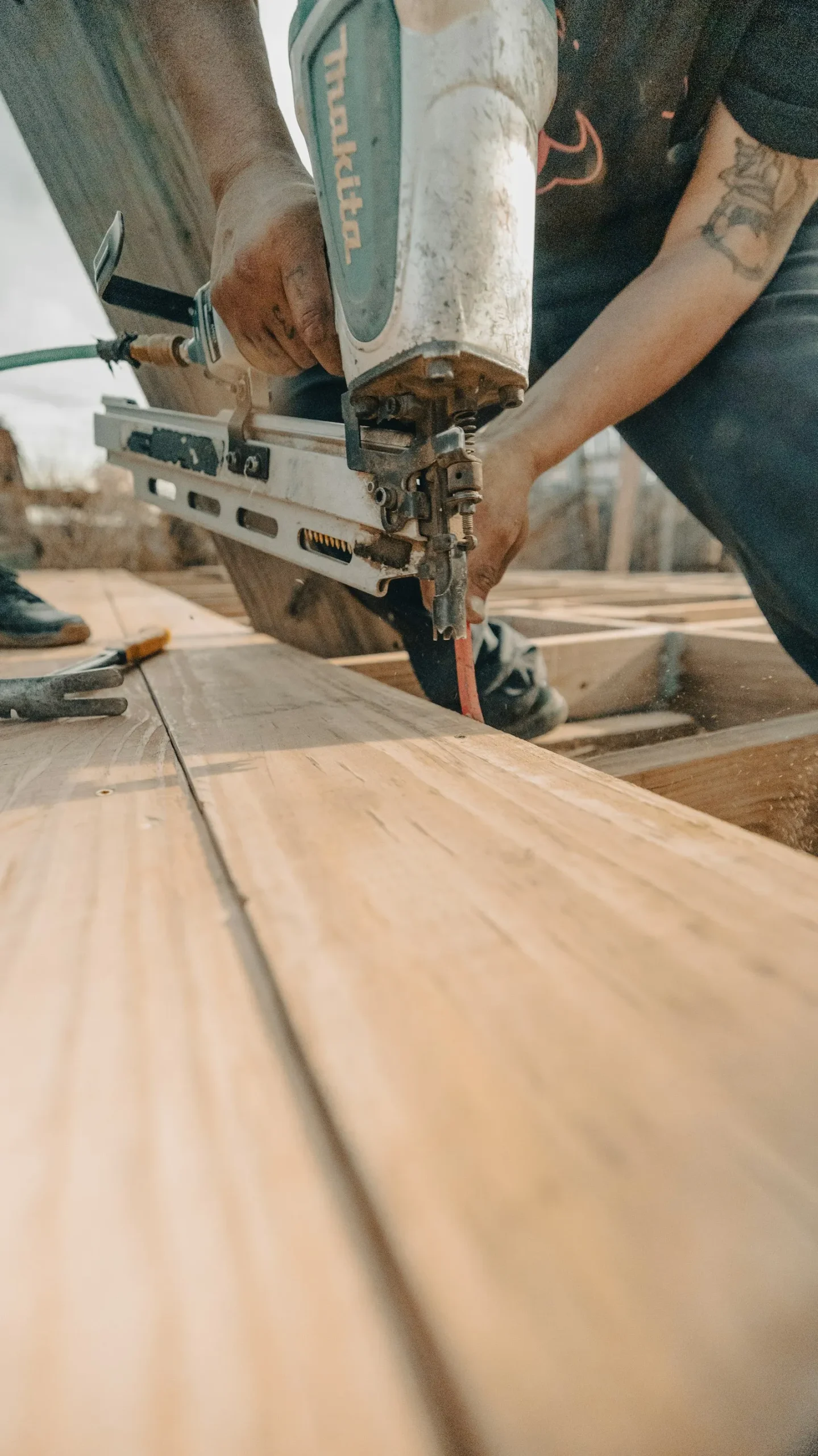
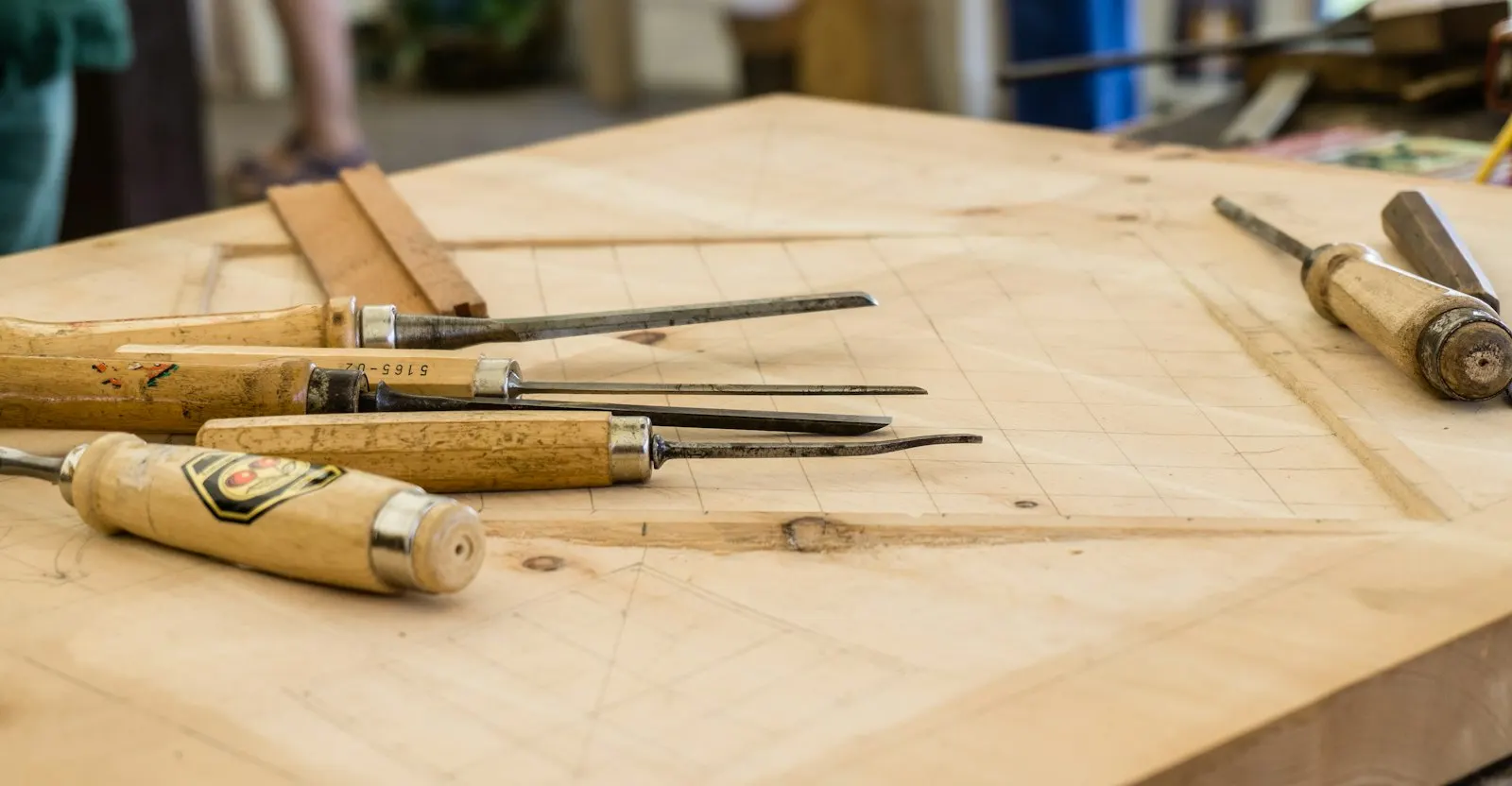
For carpentry we bring mitre saws, circular saws, routers, planers, nail guns, drills and hand tools, plus measuring and levelling gear. On site, we set up a cutting area outdoors or in a garage where possible to keep dust out of the house.
Timber choices for budgets
We’re happy to suggest options at different budget levels. For example, treated pine screens are more affordable than hardwood, and melamine shelving is more affordable than solid timber. We’ll explain the trade-offs so you can decide.
Small carpentry jobs worth doing
Not every carpentry job is a project. Some of the most useful are quick:
- Fitting a door stop or replacing a broken one
- Planing a door that rubs after winter
- Adding a shelf above the laundry tub
- Fitting a timber handrail on two or three outdoor steps
- Replacing a cracked window sill section
- Re-fixing a loose architrave
- Building a simple step for a high back door
- Fitting a timber cover over an ugly pipe or cable run
- Replacing broken lattice
- Adding a coat rack in the entry
These jobs fit well into a general repair visit. See general home repairs.
Finish and paint
Most interior carpentry ends with filling, sanding and painting. We can leave work primed and ready for your painter, or finish it ourselves with a top coat for small areas. For stained or oiled timber, we can apply the finish or leave the timber sanded and ready.
Our approach to quality
Good carpentry shows in the details: tight joins, consistent gaps, straight lines and secure fixings. We take time to set out work properly, check levels and measurements twice and clean up thoroughly. We’d rather spend an extra few minutes getting a mitre right than leave a gap filled with caulk.
Requesting a carpentry quote
Send a description, photos and rough measurements. For built-ins, a quick sketch with dimensions is ideal. If you’ve seen a design you like, share a picture and we’ll tell you how close we can get within handyman scope.
We’re glad to look at small jobs as well as larger builds, and we’ll always tell you if a project is better suited to a builder or cabinetmaker.
Every job is measured, cut and finished with care.
Frequently asked questions
Can you match my existing skirting boards?
We match profiles as closely as possible. Common profiles are easy; older or unusual ones may need the closest available option.
Do you build custom shelving?
Yes, from simple adjustable shelving to fitted shelves and basic built-in cupboards.
Can you repair a rotten window sill?
Small areas of rot can often be cut out and repaired. More extensive rot means replacing the sill.
Can you build a retaining wall?
We do garden edging and low garden beds. Structural retaining walls should be designed and built by a qualified contractor.
Do you need a permit for carpentry jobs?
Most handyman carpentry doesn’t, but structural changes and some outdoor structures do. We’ll tell you if yours might.
What timber should I use for garden beds?
Treated pine of the right hazard class, hardwood sleepers or other suitable materials. For food gardens, some prefer a liner or untreated hardwood.
Can you work on steel-framed homes?
Yes. Steel frames need different fixings, and we bring the right ones.
How long should a shelf be before it sags?
It depends on the material and load. We design spans and supports to suit what you’ll store.
Get a free quote
Send us your list of jobs, your suburb and a few photos. We will reply with a clear written scope and a free, no-obligation quote.
Get a free quote